The Shimmering Icon of Kyoto
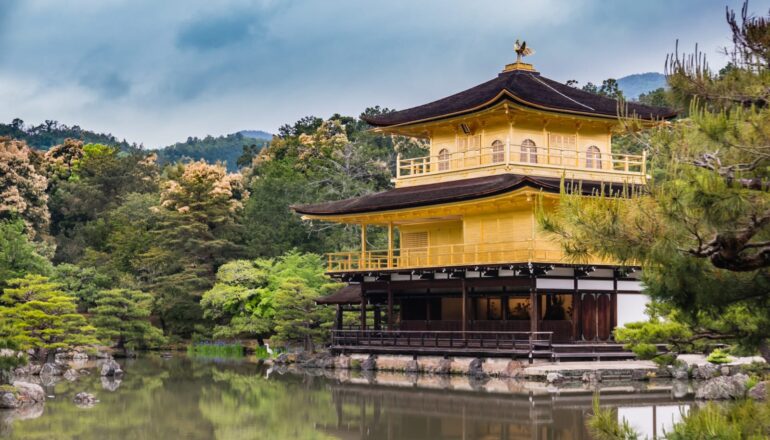
Formally known as Rokuon-ji, Kinkaku-ji is a Zen Buddhist temple whose top two floors are completely covered in pure gold leaf. Set against the backdrop of a lush forest and the tranquil Kyoko-chi (Mirror Pond), it is arguably the most photographed building in all of Japan.
The Three Faces of the Pavilion
What makes Kinkaku-ji architecturally unique is that each of its three floors represents a different style of Japanese architecture:
- First Floor (The Chamber of Dharma Waters): Built in the Shinden style of the 11th-century imperial aristocracy, featuring natural wood and white plaster.
- Second Floor (The Tower of Sound Waves): Built in the Bukke style used in samurai residences, with its exterior entirely wrapped in gold leaf.
- Third Floor (The Cupola of the Ultimate): Built in the style of a Chinese Zen Hall, gilded inside and out, and topped with a magnificent golden phoenix.
A History of Resilience
The pavilion was originally a retirement villa for Shogun Ashikaga Yoshimitsu in 1397. It has survived centuries of war, but was tragically burned down in 1950 by a novice monk. The structure you see today was meticulously rebuilt in 1955, standing as a symbol of cultural preservation and beauty.
Pro-Tips for Photographers
The Seasons: While beautiful year-round, Kinkaku-ji is world-famous for its appearance in winter. A light dusting of snow on the golden roof is a rare but legendary sight
The “Mirror” Shot: The best vantage point is right at the entrance of the path where the pavilion reflects perfectly into the pond.
Golden Hour: Arrive right at 9:00 AM when the gates open or around 4:00 PM before closing. The low sun makes the gold leaf glow with an intense, warm brilliance.